

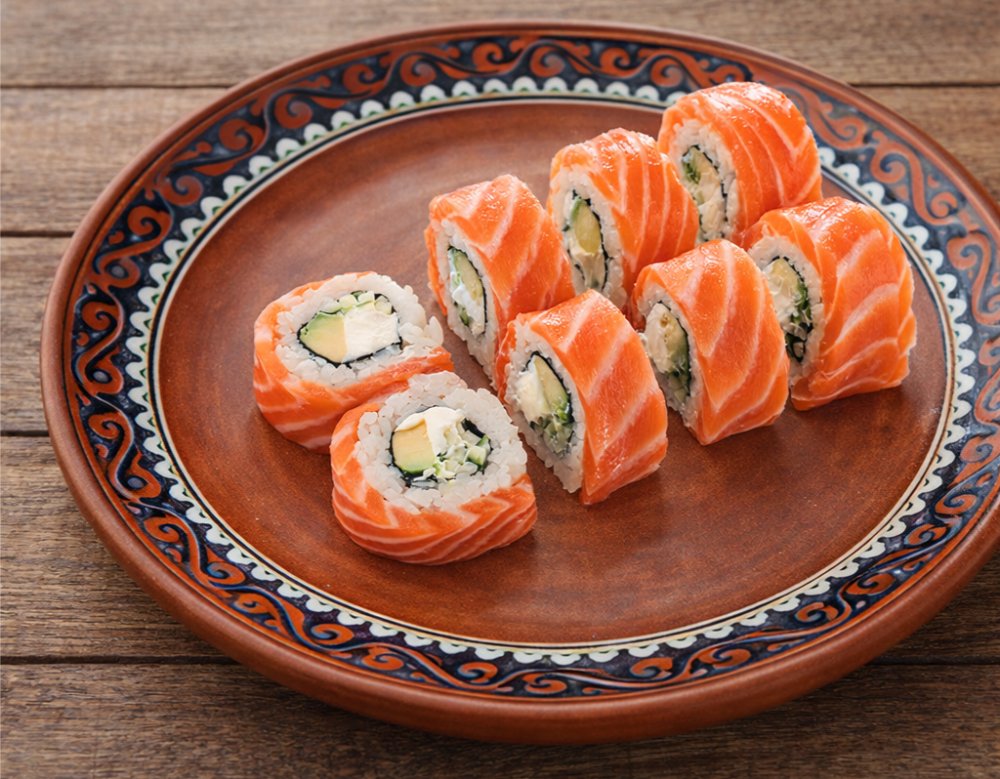
Japanese cuisine is known for its precision, minimalism, and purity of flavor. It is based on respect for ingredients, a balance of textures, and attention to detail. However, over time, sushi has evolved beyond traditional recipes and has received numerous interpretations in different countries. One of the most striking examples of this adaptation is Philadelphia sushi – a roll that combines Japanese preparation techniques with Western gastronomic preferences. Today, it occupies a special place both globally and in Georgia, remaining a consistently popular menu item.
Origin and Global Trend
Philadelphia sushi emerged as a modified version of classic rolls, aimed at Western consumers. The key feature was the use of cream cheese, which is unusual in traditional Japanese cuisine. In Japan, the emphasis is on the natural flavors of fish and rice, while the addition of cream cheese made the taste softer and more familiar to European and American audiences.
It was the combination of the delicate texture of cream cheese and fresh salmon that ensured the roll’s rapid growth in popularity. Gradually, Philadelphia sushi became a universal offering on the menus of most establishments, evolving from a local experiment into a global gastronomic trend.
The Importance of Ingredients and Preparation Technique
Typically, a roll includes several basic components:
- properly cooked rice with a characteristically slight stickiness
- nori sheet
- cream cheese
- fresh salmon or other fish
Despite the simplicity of the ingredients, the preparation technique requires precision and experience. The rice should be neither overcooked nor too dry, with the right balance of rice vinegar. The fish should be exceptionally fresh, stored at the correct temperature. The cream cheese should be evenly distributed to ensure the roll’s texture remains uniform.
Since the ingredients are few, the quality of each directly impacts the final taste. The slightest deviation in freshness or proportions can significantly alter the impression of the dish.
Why the roll remains popular
Philadelphia sushi is often recommended for first-time sushi enthusiasts. The flavor is neither overly strong nor experimental, lacking pronounced spiciness or specific seafood notes that may be unusual for beginners. This makes the roll a universal option for a wide audience.
Furthermore, the combination of cream cheese and salmon creates a rich yet harmonious gastronomic experience. The softness and slight saltiness of the fish are balanced by a creamy texture, creating a complete and rounded taste.
Visual presentation also plays an important role. A thin layer of fish, neatly covering the roll, lends it an aesthetic appeal and emphasizes the freshness of the product. In today’s consumer culture, where not only taste but also appearance is important, this factor becomes an additional advantage.
Philadelphia in the Georgian Market
Sushi culture is rapidly developing in Georgia, especially in large cities. The selection is expanding, quality standards are improving, and delivery logistics are improving. Against this backdrop, Philadelphia sushi remains one of the most popular options.
Consumers value the predictability of taste and consistent quality. This roll is often the first choice when ordering—both for individual dinners and social gatherings. It combines familiar creamy notes with elements of Japanese cuisine, making it comfortable and accessible to a wide audience.
A Balance of Tradition and Adaptation
Philadelphia sushi is a clear example of how a traditional culinary form can adapt to international tastes and become part of global gastronomic culture. Its popularity is due to its simple composition, high-quality ingredients, harmonious flavor, and versatility.
Today, it is one of the most consistently popular and sought-after rolls, equally enjoyed by both novices discovering Japanese cuisine and seasoned sushi connoisseurs.
