

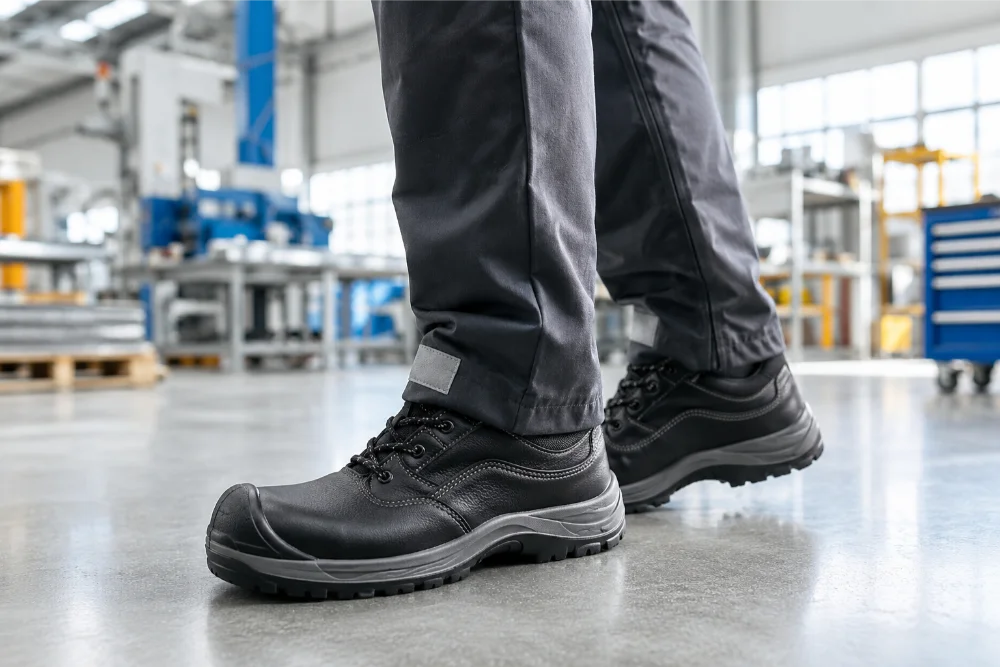
The importance of work shoes
Quality work shoes often come to mind when an old pair is already bothering us, our feet are getting tired, or we have slipped badly on the floor at least once. In practice, it is not just part of the uniform. It is a means of daily protection that accompanies a person throughout the shift. Those who are making a choice now will find it useful to compare different types of work shoes and pay attention not only to the price, but also to the purpose, material, type of sole and protection class.
In my observation, good work shoes do not boast of loud details. It just sits on your foot properly, doesn’t hinder your movement, doesn’t hurt your heel, and doesn’t remind you of yourself with pain even at the end of a hard working day. That’s its true value. Bad shoes do the opposite: they seem like a small thing, but they slowly and very stubbornly turn an ordinary day into a tiring struggle.
Foot protection at work
In the workplace, foot injuries can happen much more easily than a person imagines from the office or home. Falling heavy objects, metal fragments, wet floors, sharp debris, hot surfaces, or oil on the floor are part of a normal working day in many areas. Therefore, protective shoes are not excessive caution. They are the edge that separates an unpleasant incident from a serious injury.
Modern work shoes often use protective elements made of steel, composite, aluminum, or polycarbonate. Their purpose is to protect the toes from impact and pressure. Some models have an anti-puncture layer, which reduces the risk of damage to the sole from nails, wires or other sharp objects. This is especially important in construction, warehouses, production and repair work.
Protection does not end with heavy objects. A properly selected sole reduces the risk of slipping, while a closed and durable surface protects the foot from dust, moisture and minor mechanical damage. When you think about such details in advance, the working environment becomes more predictable. Not perfectly safe, of course, but much more controllable.
All-day comfort
Many people think of shoe comfort only as softness. In fact, comfort is a combination of size, shape, weight, cushioning, ventilation and the natural movement of the foot. If a person stands for eight or ten hours, walks, climbs stairs, carries loads or works in cold and damp places, a small defect in the shoe can become a big problem at the end of the day.
Shoes that are too heavy tire the calf quickly. A pair that is too narrow squeezes the toes and impairs blood circulation. A pair that is too wide rolls the foot inward, causing blisters, heel irritation, and an unsteady gait. A good model should not constrict the foot, but it should not “float” either. This balance is sometimes only visible when trying on, so choosing a size is never a formality.
Experienced workers know one simple thing: if your feet hurt, your attention shifts from work to pain. There is no longer any precision, no quick reaction, no normal mood. Therefore, comfortable work shoes are directly related to productivity. A person gets tired less, moves more calmly and retains energy until the end of the day.
Safe sole and materials
The sole is one of the main parts of work shoes, although it is often overlooked when choosing it. In fact, it is the sole that determines how the shoe will grip the floor, how it will withstand wear and tear, and how much it will protect a person from slipping. In a warehouse, kitchen, workshop or construction site, the surface is rarely perfectly dry and clean.
In quality models, the sole is made of materials that are designed for wear, flexibility and better grip. Some soles are more suitable for dry floors, while others are better suited for damp or oily surfaces. There are models that retain their properties better in the cold, while others are lighter and are suitable for long walks in closed spaces. There is no one universal answer here.
The upper material is no less important. Genuine leather is durable and withstands daily wear and tear. Microfiber is often used where relatively easy care and cleaning are required. Textile inserts can help with ventilation, but their justification in a particular environment depends on the working conditions. A good choice always starts with the question: where and how these shoes will work.
How to choose work shoes
The first step in choosing work shoes is an accurate assessment of the working environment. If the floor is often wet, grip should be a priority. If there is a risk of falling heavy objects, a toe cap is needed. If there are sharp debris around, attention should be paid to a puncture-resistant sole. This is simple logic, but it is this logic that is often left for last.
The second issue is the season and duration of work. In the summer, closed and poorly ventilated shoes quickly cause your feet to sweat, which can lead to discomfort and skin irritation. In cold environments, it’s important to keep warm and protect against moisture. If you’re on the move all day, the extra weight will soon start to show. If you’re mostly standing in one place, cushioning and heel support are especially valuable.
Quality work shoes aren’t just an expense. They’re an investment in your safety, health, and your normal work rhythm. A good pair lasts longer, provides better protection, and causes less discomfort every day. Shoes may seem like a small detail in your work uniform, but they often make the difference between whether you come home tired or tired and sore.
